Peruvian Food Guide: What to Eat, Where, and Why It Matters
Peruvian cuisine has been South America's best for nine years running. Here's the dishes that matter, where to eat them, and the cultural context that makes the food make sense.
Peruvian Food Guide: What to Eat, Where, and Why It Matters
Peruvian cuisine is the only South American food tradition that has been named the continent's best for nine consecutive years by the World's 50 Best Restaurants organization. Two of the top five restaurants in the world are in Lima. The country has a chef — Gastón Acurio — who is genuinely a national figure, with influence comparable to a head of state. The food is the reason most visitors who plan a quick stopover end up booking a longer trip.
This guide is the version we'd hand to a friend before they sit down for their first real meal in Lima. It covers what makes Peruvian food distinctive, the dishes that matter (and which ones are tourist filler), how to actually order, where to eat at every price level, and the cultural context that turns a list of dishes into a meaningful introduction to one of the most exciting food cultures in the world.
We've been guiding visitors to Lima's food scene since 2014 — we eat at the huariques most travelers never find, and we know the kitchens behind the city's most celebrated restaurants. What follows is what works.
Why Peruvian food became this important
Three things converged in Peru that don't converge anywhere else.
First, the geography. Peru has the Pacific (cold, nutrient-rich, full of fish), the Andes (3,000+ varieties of potato, dozens of native corns, quinoa, kiwicha), and the Amazon (river fish, exotic fruits, wild herbs). The country has every climate zone Earth has except polar. A typical Peruvian market carries ingredients no other country could pull together in one place.
Second, the immigration history. Lima was the colonial capital of Spanish South America. After independence, waves of Chinese, Japanese, Italian, and African immigrants arrived — and unlike in many countries, they integrated their food traditions deeply into the local cuisine. Modern Peruvian cooking has formal categories for Chinese-Peruvian fusion (chifa), Japanese-Peruvian fusion (nikkei), Afro-Peruvian dishes (especially in Chincha and southern coast cuisine), and criollo Spanish-influenced cooking. They aren't side notes — they're four of the major branches of the cuisine.
Third, the deliberate revival. Starting in the late 1990s, a generation of Peruvian chefs — led by Gastón Acurio — decided to elevate native ingredients (purple corn, Andean potatoes, regional chilis, river fish) into fine-dining contexts. They opened restaurants, founded cooking schools, lobbied UNESCO, and built a national food identity. The 2014 documentary Mistura captured the moment. What followed was Peru's emergence as a global culinary destination — not by inventing anything new, but by giving its existing cooking the framework and ambition it always deserved.
The result: when you sit down for ceviche in Miraflores, you're eating a dish that's been refined for 500 years on this exact stretch of coast. The food is old. The polished version of it on your plate is recent.
The major branches of Peruvian cuisine
Most travelers arrive thinking "Peruvian food" is one thing. It's six. Knowing the difference helps you order, and helps you understand what you're tasting.
Comida criolla
The colonial-era cooking of coastal Peru, blending Spanish, indigenous, and African influences. The everyday food of Lima. Dishes like aji de gallina (creamed chicken with yellow chili), seco de cordero (lamb stew), causa rellena (cold mashed potato terrine), carapulcra (stew with dried potatoes), and anticuchos (grilled beef heart skewers) all sit in this category. If you eat one Peruvian meal that isn't ceviche, it should be a criollo lunch.
Cocina marina
Coastal seafood cooking. Ceviche is the headline, but also tiradito (sashimi-style raw fish), parihuela (seafood stew), jalea (mixed fried seafood), and grilled Pacific fish like chita and lenguado. This is the cuisine that put Peru on the global food map.
Comida andina
The cuisine of the highlands — Cusco, Puno, Arequipa. Heavier, hearty, built around potatoes, corn, and meat. Pachamanca (meat and vegetables cooked underground on hot stones), rocoto relleno (stuffed Andean chili), chairo (lamb and grain soup), cuy (guinea pig — yes, really, and it's good when prepared properly). You'll see Andean dishes in Lima but they're more authentic in Cusco.
Cocina amazónica
Jungle cuisine from Peru's eastern lowlands. Less common in Lima but increasingly visible in higher-end restaurants. Juanes (rice tamales wrapped in bijao leaves), tacacho con cecina (mashed plantain with cured pork), and river fish like paiche and doncella. Worth seeking out at restaurants like Amaz in Miraflores.
Chifa
Chinese-Peruvian fusion. Brought by Chinese laborers who arrived in the 19th century to work in coastal plantations and railway construction. Modern chifa is its own category — soy sauce and ginger fused with Peruvian rice, corn, and aji chilis. Dishes like arroz chaufa (Peruvian fried rice with soy sauce, scallions, and pork) and lomo saltado are chifa-influenced staples that became national dishes. Lima has thousands of chifas; the best are in Lima's Chinatown around Calle Capón.
Nikkei
Japanese-Peruvian fusion. Brought by Japanese immigrants who arrived in the early 20th century. Dishes use Peruvian fish and Japanese techniques — tiradito, sashimi-style preparations with aji sauces. Maido (Calle San Martín, Miraflores), ranked #5 in World's 50 Best 2023, is the global flagship of nikkei cuisine. Mid-range nikkei options like Edo Sushi Bar make the style accessible at non-tasting-menu prices.
The 12 dishes you should eat
A guide that lists 30 dishes is a guide nobody finishes. Here's the focused list — the dishes that matter, with the context that makes ordering them meaningful.
1. Ceviche
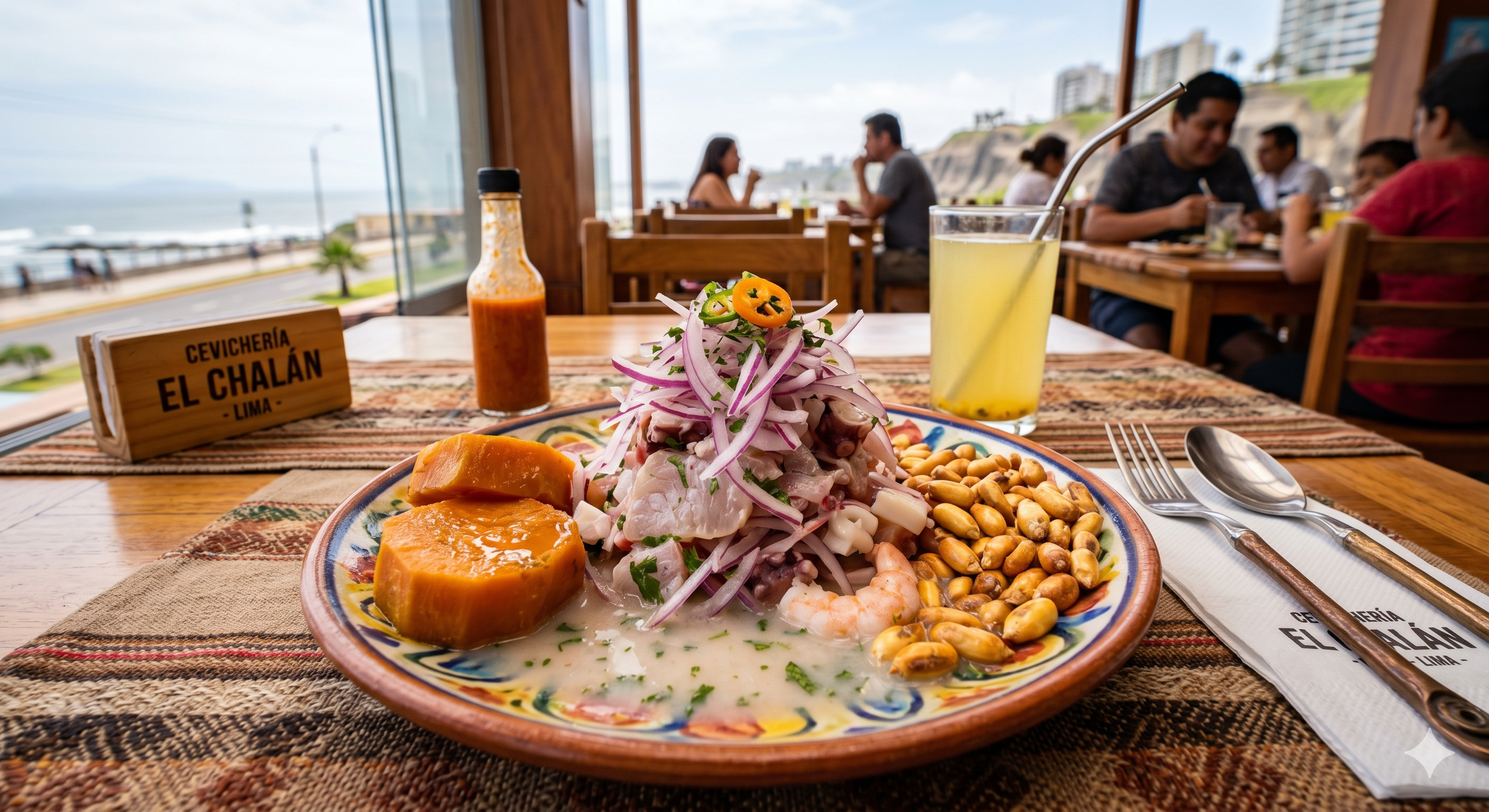
The national dish. Raw white fish (typically corvina, lenguado, or chita) cured for a few minutes in lime juice with red onion, aji limo chili, salt, and culantro (Peruvian coriander). Served with sweet potato, cancha corn (toasted), and sometimes a piece of choclo (Andean corn).
The single most important rule: ceviche is a lunch dish in Lima. The morning's catch is freshest before 15:00. Local cevicherías close around 17:00 — places that serve ceviche at dinner are catering to tourists who don't know better, and the fish has been sitting too long.
Order: ceviche mixto on your first try (a mix of fish and seafood) for the full picture, then ceviche clásico (fish only) once you know what you like.
2. Tiradito
Ceviche's sophisticated cousin. Sashimi-style slices of raw fish topped with a aji-based sauce — usually aji amarillo (yellow) or aji limo (orange). Came from the nikkei tradition of using Japanese knife technique with Peruvian flavors. Lighter than ceviche, more visually striking, often the better order at fancier restaurants.
3. Lomo saltado
Peru's most recognized chifa-criollo crossover. Strips of beef stir-fried with red onion, tomato, aji amarillo, soy sauce, and vinegar, served over rice with French fries on the side (yes, on the same plate). It sounds odd; it works. The dish that converts skeptics of Peruvian-Chinese fusion.
4. Aji de gallina
Shredded chicken in a creamy yellow chili sauce, thickened with bread and walnuts, served over rice with potatoes and a black olive. The most quintessentially criollo dish. Some travelers find it bland on first taste — it's a slow-burning dish that builds.
5. Causa
Cold mashed potato terrine, layered with chicken, tuna, or shrimp salad, and topped with avocado. The potato is mashed with aji amarillo, lime, and oil — the result is yellow, dense, and deceptively simple. Causa rellena (the "stuffed" version) is the standard. The best Lima starter that's not ceviche.
6. Anticuchos
Grilled beef heart skewers, marinated in aji panca and vinegar. Sounds intimidating; eats like the best steak skewer you've had. Street food origin — the best ones come from cart vendors in residential neighborhoods (look for anticucheras setting up at dusk). Restaurant versions are good but lose some of the smokiness.
7. Arroz chaufa
Peruvian fried rice. Soy sauce, scallions, eggs, pork or chicken, sometimes seafood. The bridge dish — every chifa in Peru serves it, and most non-chifa restaurants too. Comfort food. The kid-friendly entry point if you're traveling with families.
8. Pollo a la brasa
Charcoal-grilled rotisserie chicken, marinated in soy sauce, aji panca, beer, and cumin. The most-eaten food in Peru. It accounts for a national holiday (the third Sunday of July, Día del Pollo a la Brasa). Order it with French fries, salad, and three sauces — green (creamy aji and huacatay herb), yellow (creamy aji amarillo), and a creamy rocoto. The sauces are the point.
9. Pisco sour
Peru's national cocktail, even though Chile contests its origin (the politically correct answer is that the cocktail was codified in Lima in the 1920s, while the spirit is older and shared between both countries). Pisco (Peruvian grape brandy), lime juice, simple syrup, egg white, and a few drops of Angostura bitters. Order it at the bar of the place that invented it — Antigua Taberna Queirolo in Pueblo Libre.
10. Chicha morada
Non-alcoholic purple drink brewed from purple corn, pineapple, cinnamon, clove, and lime. Sweet, complex, and on every traditional restaurant menu. The right thing to drink with aji de gallina or seco de cordero. Vegetarian-friendly and kid-friendly.
11. Picarones
Squash and sweet potato fritters, deep-fried, drizzled with chancaca syrup (unrefined cane sugar). The dessert version of a doughnut, with more depth. Best eaten at street stalls or at Picarones Mary in the Historic Center. The single dessert worth ordering — Peruvian desserts skew sweet, but picarones hit a balance.
12. Suspiro a la limeña
Lima's signature dessert. A layer of manjar blanco (a caramelized condensed milk) topped with a port-flavored meringue. Sweet, dense, and very Peruvian. Order it once. The name translates to "Lima sigh" — supposedly because it's so sweet you can only sigh.
How to order in Lima
Two patterns dominate Lima dining, and recognizing them changes how you eat.
Lunch is the main meal
In most of Peru, lunch (almuerzo) runs 13:00 to 15:30 and is the largest meal of the day. Many restaurants offer a menú (set menu) at lunch — typically a starter, main, drink, and sometimes dessert for 25-50 soles ($7-14 USD). The menú is one of the best food values in Lima. Even excellent restaurants offer them.
Dinner is lighter, later (20:00-22:00 typically), and often more à la carte.
Cevicherías close mid-afternoon
Most traditional cevicherías serve only lunch — typically 12:00 to 17:00. If you find a "cevichería" open for dinner, it's catering to tourists. Plan ceviche at lunch. Save dinner for criollo, nikkei, or chifa.
The tip
10% is standard. Some restaurants add a 10% servicio automatically — check the bill. If included, no additional tip needed. Cash tips appreciated for outstanding service.
What to drink
Pisco sour with appetizers, Cusqueña or Pilsen Callao beer with most meals, chicha morada for non-alcohol, Inca Kola if you want the experience (yellow soda, bubble-gum sweet, the only national soft drink that outsells Coca-Cola in its home country). Wine selection in Lima is strong — Argentine and Chilean dominate.
Where to eat at every price level
The Lima restaurant scene runs from $5 menus to $250 tasting menus, and there's value at every level.
Street food and *menús* (5-15 USD)
The everyday Lima. Anticuchos from cart vendors at dusk in residential neighborhoods. Pollo a la brasa chains like Pardos or Norky's. Markets like Mercado de Surquillo No. 1 (where chefs source ingredients) for menú lunches. The 25-soles menu at a huarique is one of Lima's best values. You'll eat better than at most $50 restaurants in Western capitals.
Neighborhood institutions (15-30 USD per person)
The level where Lima's food scene gets memorable.
Canta Rana (Calle Genova 101, Barranco) — 60-year-old cevichería, the locals' choice. Lunch only. Punto Azul (multiple locations, Miraflores) — the most reliable mid-range cevichería in Miraflores. Lunch only. Tanta (multiple locations) — Gastón Acurio's casual brand, traditional Peruvian dishes done well, accessible. Antigua Taberna Queirolo (Pueblo Libre) — 19th-century bodega, original pisco sour recipe, traditional criollo food.
Mid-tier destination restaurants (30-70 USD per person)
The level where you start tasting the deliberate revival.
Isolina (Avenida Prolongación San Martín 101, Barranco) — traditional criollo in a converted colonial house, family-style. Amoramar (Calle Garcia y Garcia 175, Barranco) — seafood-forward, colonial-courtyard setting, popular dinner spot for couples. Rafael (Calle San Martín, Miraflores) — Italian-Peruvian fusion. Cosme (Calle Tacna 220, Barranco) — contemporary Peruvian, small plates, strong cocktails. El Mercado (Hipólito Unanue, Miraflores) — Rafael Osterling's seafood-forward lunch spot.
Fine dining (100-250 USD per person)
The level Lima is internationally famous for.
Central (Avenida Pedro de Osma 301, Barranco) — #2 in World's 50 Best 2023. Chef Virgilio Martínez's tasting menu organized by altitude — each course represents a Peruvian ecosystem from the Pacific to the Andes. Around $250 per person with wine pairing. Reservation lead time 2-3 months.
Maido (Calle San Martín, Miraflores) — #5 in World's 50 Best 2023. Chef Mitsuharu "Micha" Tsumura's nikkei tasting menu. Around $200 per person. Reservation lead time 2-3 months.
Mérito (Calle 28 de Julio 206, Barranco) — chef Juan Luis Martínez's bistronomique Peruvian-Venezuelan fusion. More accessible reservations than Central or Maido, comparable quality. Around 250 soles ($70 USD) per person.
Kjolle (Avenida Pedro de Osma 301, Barranco) — chef Pía León (Virgilio Martínez's wife and former Central head chef), her own restaurant since 2018. Increasingly rated higher than Central by some critics.
The huariques: Lima's hidden food culture
The huariques are the unmarked, unlisted, family-run restaurants where Lima actually eats. No website. Often no sign. Sometimes just a doorway in a residential block. The menu is whatever was best at the market that morning. Most travelers never find them, because the entire point of a huarique is that it's not in the guidebooks.
A few characteristics:
- Cash only in most cases.
- Locals only at lunch — you might be the only foreigner.
- One or two daily specials, not a long menu.
- The owner is often the cook, sometimes their grandmother.
- Prices around 25-40 soles ($7-11 USD) for a complete menú.
The food at a great huarique genuinely competes with the city's destination restaurants — at a tenth of the price. The challenge is finding them.
🍴 The most direct way into Lima's hidden food culture
Our Huariques & Bike tour ($95 USD, 4h30, 10 km) takes you to four huariques on bikes between stops, with tastings included — anticuchos at a 30-year-old grill, ceviche from a back-alley specialist, causa from a family-run lunch spot, and a proper pisco sour at a bodega most tourists never enter. It's our most-booked food experience.
✓ Trilingual local guide (English, French, Spanish)
✓ Four full tastings included
✓ Comfortable bikes between stops (mostly flat)
✓ Small groups (15 people maximum)
Book the Huariques & Bike tour →
The markets
Two Lima food markets stand out for visitors.
Mercado de Surquillo No. 1
Where Lima's chefs source their ingredients. Walk in by 9:00 — by 11:00 the lunch rush starts and prices climb. You'll see fish you've never heard of (chita, fortuno, lenguado, paiche), tropical fruit at its peak (lúcuma, cherimoya, aguaymanto, granadilla), and stalls of aji chilis in shades from yellow to deep red. Eat a 25-soles menú of stew at one of the back-corner stalls. Open daily, busiest 9:00-13:00.
Mercado Central de Lima
The historic central market in the Mercados district near Lima's Chinatown. Larger, more chaotic, more local — and gateway to Calle Capón (Lima's Chinatown spine, lined with chifas). Visit by day with awareness, ideally with a guide.
Common mistakes tourists make
The honest list of how Lima dining goes wrong:
- Eating ceviche at dinner. The fish has been sitting since lunch. Locals only eat ceviche before 15:00. Same with cevicherías — most close mid-afternoon.
- Eating at the ground-floor restaurants in Larcomar. Tourist-priced, average food. Walk 10 minutes inland.
- Ordering only "tourist-friendly" dishes. Lomo saltado and aji de gallina are great, but they're not all of Peruvian food. Branch out — seco de cordero, causa, anticuchos, parihuela.
- Skipping the menú at lunch. The 25-50 soles fixed menus at neighborhood spots are how Lima eats every day. They're cheaper than a Starbucks back home and three times the food.
- Not booking ahead at Maido or Central. 2-3 months lead time. Period.
- Drinking tap water. Lima's tap water is technically potable but locals filter it. Stick to bottled or filtered.
- Tipping wrong. 10% standard; 10% servicio sometimes included. Check the bill.
How to integrate food into your Lima trip
For a 1-day visit: lunch at a cevichería is non-negotiable. Skip everything else.
For 2 days: Day 1 lunch ceviche, Day 2 criollo lunch (Antigua Taberna Queirolo) and nikkei or contemporary dinner (Cosme, Mérito).
For 3 days: Day 1 ceviche, Day 2 criollo, Day 3 a deeper food experience — either a huariques tour or a destination dinner at Central, Maido, or Kjolle. This is the structure most of our guests follow.
For longer stays: add a cooking class (4 hours, $80-120 USD), visit Surquillo Market early one morning, and try a chifa meal in Calle Capón for the full picture.
FAQ
What is the most famous Peruvian dish?
Ceviche is the national dish and the most internationally recognized. Lomo saltado is the second most famous — beef stir-fried with onion, tomato, aji amarillo, and soy sauce, served with rice and French fries. Aji de gallina is the third pillar — creamed chicken in yellow chili sauce. Together these three are the introduction to Peruvian cooking that almost every visitor gets in their first 48 hours.
When should I eat ceviche in Lima?
At lunch only — between 12:00 and 15:00. Ceviche is a fresh-fish dish, and the morning's catch is at peak freshness before mid-afternoon. Most traditional cevicherías close around 17:00 for this reason. If you find a "cevichería" serving ceviche at dinner, it's catering to tourists — the fish has been sitting since lunch and isn't at its best. Save dinner for criollo, nikkei, or chifa.
What is the best restaurant in Lima?
By international ranking: Central (#2 in World's 50 Best 2023) and Maido (#5 in World's 50 Best 2023). Both require 2-3 month reservations and run around $200-250 per person with wine. For mid-tier: Mérito, Cosme, Isolina, and Rafael are all consistently excellent at 30-50% of the cost. For everyday Peruvian food: Antigua Taberna Queirolo, Canta Rana, and the menús at huariques.
What should vegetarians eat in Lima?
Peru is increasingly vegetarian-friendly, especially in Miraflores and Barranco. Causa can be made with avocado or tuna-free fillings. Aji de gallina has vegetarian versions in some restaurants. Tacu tacu (rice-and-bean cake) is naturally vegetarian. Chicha morada for drinks. Specifically vegetarian-focused restaurants include Veggie Pizza (Miraflores) and Quinoa Café. Most contemporary restaurants now have explicit vegetarian options on the menu.
Is Peruvian food spicy?
Less than you'd expect. Aji chilis are central to the cuisine but are used for flavor more than heat. Most Peruvian dishes have moderate heat levels — comparable to mild Thai or Mexican rather than aggressive. The notable exception: rocoto relleno (Andean stuffed chili) and pure aji sauces, which can be genuinely spicy. You'll typically be served chili sauces on the side, so you can adjust to taste.
What is a huarique?
A huarique is an unmarked, unlisted, family-run restaurant where Lima actually eats. Often no sign or website, sometimes just a doorway in a residential block. The food is what was best at the market that morning, the cook is often the owner, and prices run 25-40 soles ($7-11 USD) for a full meal. They're typically cash-only and locals-only at lunch. Most travelers never find them — the easiest way in is with a guide.
What should I drink with Peruvian food?
Pisco sour with appetizers (especially before ceviche). Cusqueña or Pilsen Callao beer with most meals. Chicha morada for non-alcoholic — sweet, complex, made from purple corn. Inca Kola for the cultural experience (yellow soda, bubble-gum sweet, outsells Coca-Cola in Peru). Wine selection in Lima is strong, mostly Argentine and Chilean.
What's the best food experience in Lima?
For food-focused travelers, the most memorable experience is consistently a huariques tour — accessing the unmarked family restaurants that the chefs at Central and Maido eat at on their days off. The food is at the level of destination restaurants at a fraction of the price, and the cultural experience is uniquely Lima. Our Huariques & Bike tour is the most-booked option. A cooking class (4 hours, $80-120 USD) is a strong second option for travelers who want to take the cuisine home.
Do I need to book Lima restaurants in advance?
For Maido, Central, and Kjolle: book 2-3 months ahead, no exceptions. For Mérito: 1 month. For mid-tier destination restaurants (Rafael, Cosme, Isolina, Amoramar): 1-2 weeks recommended on weekends. For cevicherías and casual lunches: walk-ins work, though weekends benefit from a 1-day reservation. Note: ceviche only at lunch.
Want to eat Lima the way locals do? Our Huariques & Bike tour takes you to the unmarked, family-run restaurants where the city actually eats — four tastings on bikes, with the cultural context that makes the food make sense. Or contact our team to plan a food-focused Lima trip around your dates.